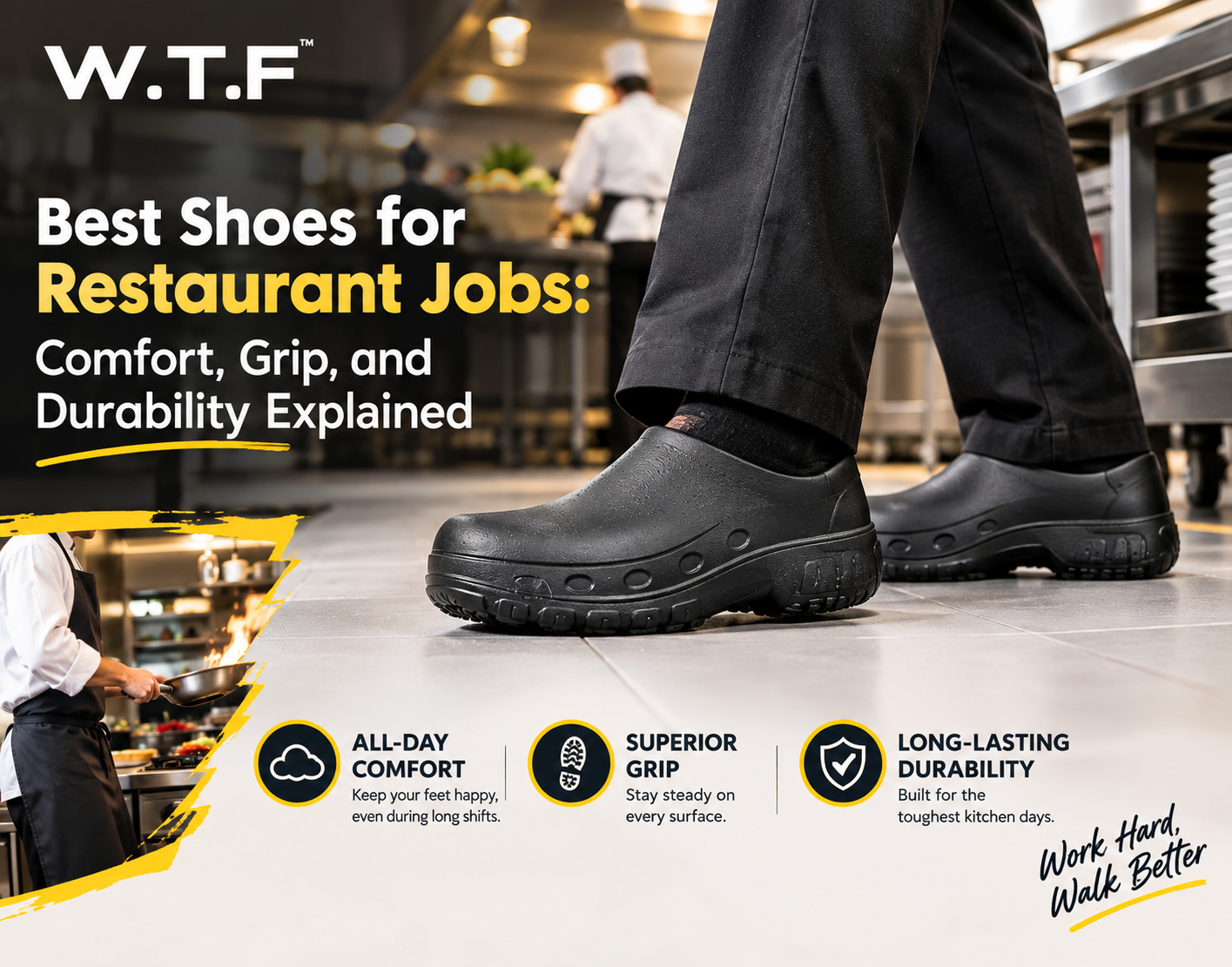
Best Shoes for Restaurant Jobs: Comfort, Grip, and Durability Explained
 17 Sep 2026
Restaurant jobs demand constant movement, long hours on your feet, and quick reactions in busy work areas. Choosing the best shoes for restaurant work is therefore about much more than appearance. The right footwear should provide reliable grip, cushioning, durability, and protection against common kitchen hazards such as water, grease, oil, and food spills.
Whether you are a chef, server, dishwasher, bartender, baker, or kitchen assistant, your shoes need to handle the conditions of your workplace. A well-designed pair can help you stay comfortable during extended shifts while supporting safer movement across hard and potentially slippery floors.
Why the Best Shoes for Restaurant Workers Need Special Features
Restaurant environments are different from ordinary workplaces. Employees frequently walk across tiled or sealed floors where liquids and food ingredients can be accidentally spilled. At the same time, staff may spend several hours standing at cooking stations, serving counters, preparation areas, or dishwashing sections.
Ordinary sneakers may feel comfortable initially but may not provide sufficient traction or protection for a professional food-service environment. Similarly, fashionable footwear may lack the cushioning required for extended standing.
Restaurant footwear should address these practical challenges. Features such as slip-resistant outsoles, supportive midsoles, durable uppers, moisture protection, and stable heel construction can make footwear more appropriate for demanding shifts.
The correct shoe can also contribute to better movement. When your feet feel supported, it becomes easier to walk, turn, bend, and move between workstations without constantly thinking about foot discomfort.
Best Shoes for Restaurant: Key Features to Consider
When comparing different options, focus on how the footwear performs during an actual restaurant shift. The best shoes for restaurant jobs should combine safety and comfort without becoming unnecessarily heavy or restrictive.
1. Reliable Slip Resistance
Traction should be one of your first considerations. Restaurant floors can become slippery because of spilled water, cooking oil, sauces, cleaning products, and other liquids.
Look for outsoles with a tread pattern designed to maintain contact with the floor. Rubber compounds are commonly used because they can provide dependable traction across many indoor surfaces.
It is important to remember that slip-resistant footwear does not make a floor completely safe. Good housekeeping, prompt spill cleanup, and proper workplace procedures are still essential.
2. Comfortable Cushioning
Standing for long periods can place pressure on the heels, arches, and balls of the feet. This is why cushioning is an important feature for restaurant employees.
Comfortable shoes for restaurant workers should provide enough cushioning to absorb everyday impact without feeling excessively soft. A supportive midsole and well-padded footbed can make extended periods of standing and walking more manageable.
Comfort should also come from the overall construction. The shoe should bend naturally where your foot bends while keeping the heel stable.
3. Proper Arch Support
Cushioning and arch support are not the same thing. While cushioning helps soften impact, support helps keep the foot properly positioned inside the shoe.
Workers who stand for many hours should look for a footbed that feels supportive without creating pressure. Since everyone's feet are different, the best design depends on individual foot shape, arch type, and personal comfort.
A secure heel counter can also help minimize unnecessary foot movement, particularly when walking quickly across a busy restaurant.
4. Water Protection
Restaurants involve frequent contact with liquids. Employees working around sinks, dishwashing stations, beverage counters, and food preparation areas may encounter water throughout the day.
Waterproof shoes for restaurant environments can help keep moisture from reaching the feet. However, waterproof and water-resistant are not always the same. Check the manufacturer's specifications to understand the level of protection provided.
Breathability should also be considered. Completely sealed footwear may retain heat and moisture, so a good design needs to balance water protection with airflow and everyday comfort.
5. Oil and Grease Resistance
Oil is one of the major challenges in professional kitchens. Cooking oils and greasy residues can reduce traction when they reach the floor, making outsole performance particularly important.
Oil resistant restaurant shoes are designed with materials or construction intended to better withstand exposure to oily substances. This can be especially useful for chefs, fry cooks, line cooks, and other employees who work close to grills, fryers, and cooking stations.
Oil resistance should be considered alongside slip resistance. A shoe may resist certain substances without necessarily providing adequate grip, so check both features before purchasing.
6. Durable Construction
Restaurant footwear experiences repeated movement every day. Walking, standing, crouching, turning, and carrying items can gradually wear down shoes.
A durable upper, strong stitching, reinforced high-wear areas, and a sturdy outsole can improve longevity. The goal is to find footwear that can withstand regular professional use without becoming uncomfortable.
Durability also affects value. A slightly higher initial investment may be worthwhile if the footwear maintains its structure, cushioning, and traction for longer.
7. Lightweight Feel
Restaurant workers need to move efficiently. Heavy shoes can make a long shift feel more tiring, particularly when an employee is constantly walking between different stations.
A lightweight construction can reduce unnecessary fatigue while still providing sufficient stability. However, extremely lightweight shoes should not sacrifice outsole quality or protection simply to reduce weight.
8. Secure and Comfortable Fit
Even technically advanced footwear will not perform well if it does not fit properly. Shoes that are too loose can cause the foot to slide, while shoes that are too tight may create pressure around the toes and sides of the foot.
A good fit should allow natural toe movement while keeping the heel secure. Try shoes with the socks you normally wear during work and walk around for several minutes before making a decision.
Best Non Slip Restaurant Shoes: What Should You Check?
The phrase “non-slip” can cover different levels of performance, so restaurant employees should look beyond the label. Check the outsole design, material, tread pattern, and intended working conditions.
The best non slip restaurant shoes should offer consistent traction while allowing natural movement. A deep or appropriately patterned tread can help maintain contact with the floor, while a flexible sole can make walking more comfortable.
Different restaurant areas may also create different demands. A front-of-house server may need lightweight shoes with strong grip, while a chef working near fryers may place greater importance on oil resistance and moisture protection.
Before buying, consider the surfaces you encounter most often. Tile, concrete, vinyl, and other flooring materials can behave differently when exposed to moisture or grease.
Choosing Kitchen Work Shoes for Different Restaurant Roles
Not every restaurant employee needs exactly the same footwear. Your daily responsibilities should guide your choice.
Chefs and cooks often need strong traction, heat-aware construction, easy cleaning, and resistance to moisture or grease. Servers may prioritize lightweight comfort because they can walk continuously throughout a shift. Dishwashers may need strong water protection, while managers or front-of-house employees may want a combination of professional appearance and practical performance.
Consider these factors before purchasing:
How many hours you stand or walk during a shift
Whether your work area is frequently exposed to water or grease
Whether your employer has specific footwear requirements
How easy the shoes are to clean and maintain
Whether the outsole provides suitable traction for your flooring
For professionals looking for purpose-oriented footwear, Futsran offers options designed with workplace comfort and practical performance in mind.
How to Maintain Restaurant Work Shoes
Even high-quality footwear requires regular maintenance. After each shift, inspect the outsole and remove food particles, dirt, or grease that may have collected in the tread.
Clean the upper according to the manufacturer's instructions. Avoid harsh cleaning products if they can damage the material or affect its protective properties.
Allow wet footwear to dry properly before wearing it again. Do not place shoes directly against intense heat because excessive temperatures can damage adhesives, materials, or cushioning.
Most importantly, monitor the condition of the outsole. If the tread becomes significantly worn, traction may decline even if the upper still looks acceptable. Replacing heavily worn footwear is an important part of maintaining workplace safety.
Common Mistakes When Buying Restaurant Shoes
One common mistake is choosing footwear based only on appearance. Restaurant shoes need to perform under demanding conditions, so practical features should take priority.
Another mistake is assuming every work shoe is suitable for food-service environments. Work footwear is designed for many industries, and a shoe intended for a warehouse or office may not provide the traction needed on greasy restaurant flooring.
Ignoring fit is another problem. A shoe can have excellent specifications but still cause discomfort if its shape does not suit your feet. Always consider width, toe room, heel stability, cushioning, and overall support.
Finally, do not wait until your shoes are completely worn out before replacing them. Reduced tread, damaged construction, compressed cushioning, or loss of stability are signs that your footwear may no longer provide the performance you need.
Final Thoughts
The right restaurant footwear should make demanding shifts easier, not add another source of discomfort. Good traction, supportive cushioning, durable construction, moisture protection, and a secure fit are among the most important qualities to consider.
Whether you work in the kitchen, dining area, bar, or dishwashing section, choose footwear according to your actual working conditions. The best shoes for restaurant jobs are those that balance grip, comfort, durability, and practical protection while allowing you to move confidently throughout your shift.
Frequently Asked Questions
1. What makes a good restaurant work shoe?
A good restaurant shoe should provide slip resistance, comfort, support, durability, and suitable protection from moisture or grease.
2. Are non-slip shoes necessary for restaurant workers?
They are highly recommended because restaurant floors may become wet or greasy during normal operations.
3. Are waterproof shoes useful in restaurants?
Yes. They can help protect feet from water and spills, especially in kitchens, dishwashing areas, and beverage stations.
4. Should restaurant shoes be oil resistant?
Oil resistance can be especially useful for workers who regularly work around cooking oils, fryers, grills, and greasy surfaces.
5. How often should restaurant work shoes be replaced?
Replace them when the outsole is significantly worn, cushioning has deteriorated, or the shoes no longer provide proper support and traction.