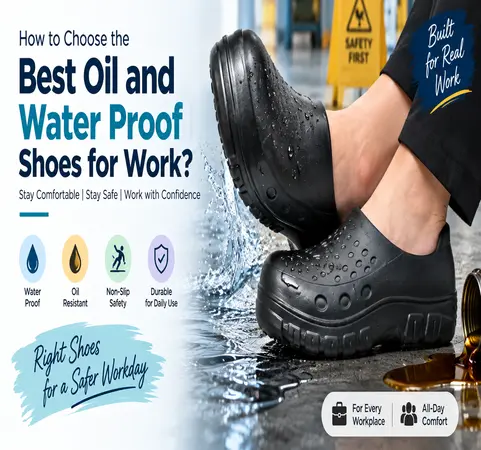
How to Choose the Best Oil and Water Proof Shoes for Work?
 16 Sep 2026
Choosing the right oil and water proof shoes for work is essential when your job involves wet floors, spilled liquids, grease, oil, or other workplace hazards. The right pair can provide better grip, comfort, durability, and protection throughout a long working day. Whether you work in a restaurant, commercial kitchen, hospital, food-processing unit, warehouse, or industrial environment, footwear should be selected based on the conditions you regularly face.
Work shoes are more than just protective footwear. They can affect your stability, comfort, posture, and confidence while moving around busy workplaces. A good pair should offer reliable slip resistance while keeping your feet comfortable and protected. Understanding the important features can help you make a practical decision instead of choosing footwear based only on appearance or price.
Why Are Oil and Water Proof Shoes Important for Work?
Workplaces such as kitchens, restaurants, hospitals, workshops, and manufacturing facilities often have floors exposed to water, cooking oil, cleaning solutions, grease, and other liquids. Ordinary shoes may absorb moisture, become difficult to clean, or provide insufficient traction on slippery surfaces.
Oil and water proof shoes are designed to handle these demanding conditions. Their materials and outsole construction can help reduce liquid penetration while providing better resistance against slipping. This is particularly useful for employees who spend several hours standing and walking on potentially wet or greasy floors.
For example, chefs and kitchen staff frequently deal with spilled water, sauces, oils, and food ingredients. Healthcare professionals may encounter disinfectants and liquid spills, while workers in industrial environments may come into contact with lubricants or oily surfaces. Wearing footwear designed for these conditions can improve workplace safety and day-to-day comfort.
The best work footwear should also be easy to maintain. Shoes that can be wiped or washed easily are particularly useful in environments where hygiene is important.
How to Choose the Best Oil and Water Proof Shoes for Work?
Before purchasing work footwear, consider more than whether it is labelled waterproof or slip-resistant. Different occupations require different combinations of protection, comfort, flexibility, and durability.
1. Check the Outsole for Slip Resistance
Traction should be one of your first considerations. A quality work shoe should have an outsole with a tread pattern designed to improve grip on wet and greasy surfaces.
Look for rubber or other durable outsole materials that provide dependable traction. Deep or strategically designed tread patterns can help channel liquids away from the contact area and improve stability while walking.
However, remember that no shoe can completely eliminate the risk of slipping. Workplace conditions, floor contamination, walking speed, and maintenance also affect safety.
2. Consider the Material
The upper material influences water resistance, durability, breathability, and cleaning convenience. Synthetic materials, treated leather, and specialized waterproof materials are commonly used in work footwear.
For wet or messy workplaces, choose a material that does not easily absorb liquids and can be cleaned without extensive effort. In food-service environments, easy-to-clean surfaces can also support better hygiene practices.
3. Look for Oil Resistance
Water resistance alone is not enough for environments where cooking oil, grease, lubricants, or petroleum-based substances may be present. Check the manufacturer's specifications to determine whether the outsole and upper are suitable for oily environments.
Oil-resistant construction can help the outsole maintain its performance when exposed to greasy workplace surfaces. This makes it an important consideration for restaurant employees, mechanics, factory workers, and other professionals.
4. Prioritize Comfort for Long Working Hours
A work shoe can have excellent protective features but still be unsuitable if it causes discomfort after several hours. People who work eight to twelve-hour shifts should pay close attention to cushioning, arch support, heel stability, and overall fit.
The shoe should provide enough room for your toes to move naturally without allowing the heel to slide. Excessively tight footwear can cause pressure points, while shoes that are too loose may reduce stability.
A cushioned footbed can help absorb impact during repeated walking and standing. Breathable construction may also reduce heat and moisture buildup inside the shoe.
5. Choose the Right Shoe for Your Profession
Different professions have different footwear requirements. A restaurant chef may prioritize slip resistance and easy cleaning, while a doctor may prefer lightweight footwear that remains comfortable during long hospital shifts.
When comparing shoes for chef requirements, look for a closed design, strong traction, easy-clean construction, and comfortable cushioning. Kitchen workers often move quickly around spills and crowded workspaces, so stability is particularly important.
Similarly, shoes for doctors should generally emphasize lightweight comfort, secure fit, easy maintenance, and sufficient traction. Medical professionals can spend much of their day walking between departments or standing for extended periods, making ergonomic comfort especially valuable.
6. Check the Fit Before Buying
Even a technically advanced work shoe will not perform well if it does not fit correctly. Try shoes with the type of socks you normally wear at work. Ideally, check the fit later in the day because feet can swell slightly after prolonged activity.
Pay attention to the heel, arch, toe box, and width. Your toes should not feel compressed, and your heel should remain secure when walking.
If you purchase footwear online, carefully review the manufacturer's size chart rather than assuming your usual shoe size will always be identical across brands.
7. Consider Easy Cleaning and Maintenance
Work shoes used in kitchens, hospitals, factories, or food-service environments can become dirty quickly. Choose footwear with surfaces that can be cleaned according to the manufacturer's instructions.
Regular cleaning can help maintain the appearance and hygiene of your shoes. It can also prevent accumulated grease, dirt, and other contaminants from affecting the outsole's traction.
Avoid using harsh chemicals unless the manufacturer specifically recommends them. Proper drying is also important because repeatedly storing damp footwear can contribute to unpleasant odors and material deterioration.
What Features Should You Look for in Oil and Water Proof Shoes?
When comparing different models, focus on the overall combination of safety, comfort, and practicality rather than one feature alone. A well-designed work shoe should complement your workplace and daily routine.
Some of the most useful features to compare include:
Slip-resistant outsole with a suitable tread pattern
Water-resistant or waterproof construction
Oil-resistant outsole where required
Cushioned insole for extended wear
Secure heel and supportive fit
Durable materials suitable for workplace conditions
Easy-to-clean exterior
Breathable construction where appropriate
You may also come across footwear styles such as clogs, sneakers, boots, and slip-on work shoes. The best choice depends on your workplace requirements and personal comfort.
For example, kitchen crocs are popular among some food-service workers because clog-style footwear can be lightweight, easy to clean, and convenient to wear. However, buyers should still verify the specific model's slip resistance, material construction, and workplace suitability rather than assuming every clog offers the same protection.
Common Mistakes to Avoid When Buying Work Shoes
One of the biggest mistakes is selecting footwear based only on price. Cheap shoes may initially seem economical, but poor cushioning, weak traction, or premature wear can make them less practical over time.
Another mistake is assuming that waterproof automatically means slip-resistant. These are different characteristics. A shoe may prevent water from entering while still performing poorly on a greasy floor.
You should also avoid choosing an overly loose or tight fit. Footwear that moves around excessively can reduce stability, while overly narrow shoes may become uncomfortable during long shifts.
Finally, don't ignore the condition of the outsole. Even high-quality slip-resistant footwear can lose effectiveness as the tread wears down. Regularly inspect your work shoes and replace them when the sole or other protective features show significant deterioration.
How to Maintain Your Work Shoes for Longer Use
Proper maintenance can extend the usable life of workplace footwear. Clean dirt and contaminants regularly, especially after exposure to oil or food residue. Allow shoes to dry completely before storing them, and follow the manufacturer's cleaning recommendations.
Inspect the outsole frequently for signs of excessive wear. If the tread becomes noticeably smooth or damaged, it may be time to replace the footwear. Also check the stitching, sole attachment, insole, and upper material for deterioration.
Rotating between two pairs, when practical, can give each pair more time to dry and recover between shifts. This can be particularly useful for professionals who wear their work shoes every day.
Final Thoughts
Selecting the right oil and water proof shoes for work means balancing traction, water and oil resistance, comfort, fit, durability, and ease of maintenance. The ideal footwear should match your actual working environment rather than simply having a long list of features.
Whether you're searching for footwear for a commercial kitchen, hospital, factory, warehouse, or another demanding workplace, take time to compare materials, outsole performance, fit, and cleaning requirements. A thoughtfully chosen pair can provide dependable support and help you move more confidently throughout your workday. For quality-focused workplace footwear options, FUTSRAN can also be considered when comparing suitable work shoe choices.
Frequently Asked Questions
1. Are oil and water proof shoes suitable for kitchens?
Yes. They can be suitable for kitchens when they also provide reliable slip resistance, easy cleaning, and appropriate workplace protection.
2. Are waterproof shoes automatically slip-resistant?
No. Waterproofing and slip resistance are separate features. Always check the manufacturer's slip-resistance specifications.
3. What are the best shoes for chefs?
The best shoes for chefs should offer strong traction, comfortable cushioning, easy cleaning, and resistance to workplace liquids and grease.
4. Can doctors wear slip-on work shoes?
Yes. Slip-on footwear can be practical for doctors if it provides a secure fit, adequate traction, cushioning, and appropriate workplace protection.
5. How often should work shoes be replaced?
Replacement depends on usage and wear. Inspect the outsole, tread, cushioning, and upper regularly and replace footwear when its protective or supportive features deteriorate.