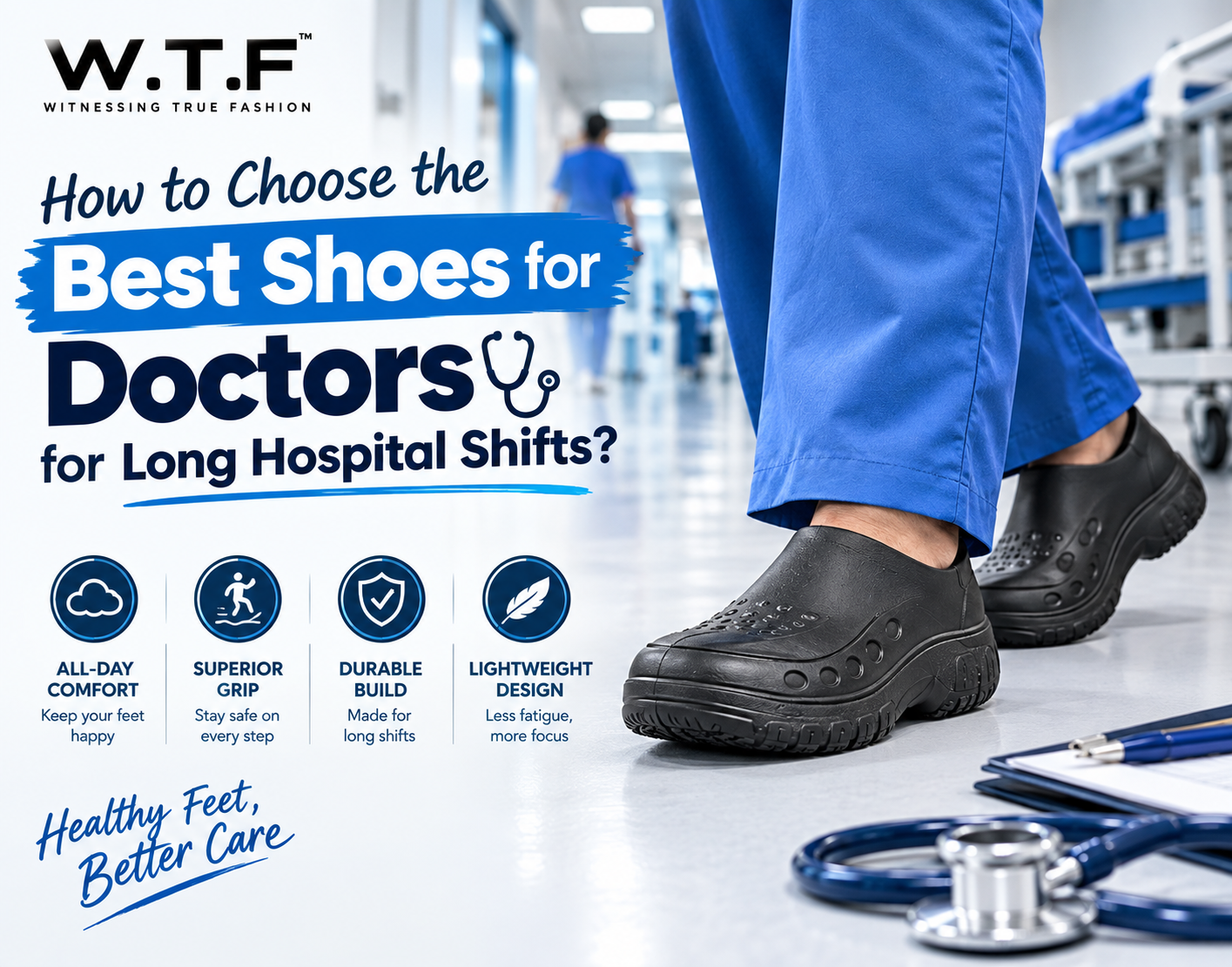
How to Choose the Best Shoes for Doctors for Long Hospital Shifts?
 16 Sep 2026
Finding the best shoes for doctors is important when your work involves long hospital shifts, constant walking, standing, and quick movement between departments. Doctors may spend hours in operating rooms, emergency departments, wards, clinics, and corridors, making footwear an essential part of everyday comfort and workplace safety. The right pair should provide reliable support, cushioning, stability, and traction without feeling heavy or restrictive.
A comfortable shoe can make a noticeable difference during demanding shifts. Poorly designed footwear may contribute to tired feet, discomfort, pressure points, and reduced comfort by the end of the day. When choosing medical footwear, doctors should therefore consider more than appearance. Features such as arch support, breathable materials, slip resistance, cushioning, fit, durability, and easy maintenance all matter.
Why Choosing the Best Shoes for Doctors Matters
Hospital environments are different from typical workplaces. A doctor may walk across hard floors for several hours, stand beside a patient's bed, assist during procedures, or move quickly during emergencies. These activities place repeated stress on the feet and lower body.
The right footwear helps create a stable foundation while walking and standing. Adequate cushioning can make hard surfaces feel more comfortable, while supportive construction may help reduce the feeling of foot fatigue during extended shifts.
Hospital floors can also become wet or contaminated by accidental spills. This makes traction an important consideration. Shoes with slip-resistant outsoles can provide better grip on smooth surfaces and help doctors move confidently through different areas of a healthcare facility.
Footwear hygiene is another consideration. Doctors regularly work around fluids, dust, cleaning products, and other contaminants. Shoes that are easy to wipe clean and maintain can be more practical for everyday hospital use.
Key Features to Look for in the Best Shoes for Doctors
Not every work shoe is suitable for healthcare professionals. The following features can help doctors identify footwear that is practical for demanding hospital routines.
1. Comfortable Cushioning
Long shifts require footwear that feels comfortable for extended periods. Look for midsoles that provide adequate cushioning without making the shoe unstable. Responsive cushioning can absorb some of the impact created by repeated walking on hard hospital flooring.
The shoe should also avoid excessive pressure around the heel, toes, and sides of the foot. A comfortable interior can be particularly useful when footwear is worn continuously throughout a long shift.
2. Proper Arch and Foot Support
Support is just as important as cushioning. A shoe should hold the foot securely while allowing natural movement. Good arch support can help create a balanced feel when standing or walking for extended periods.
Doctors with specific foot conditions or individual support requirements should consider advice from a qualified healthcare professional when selecting footwear.
3. Slip-Resistant Outsole
Hospital floors may be smooth and can occasionally become wet. A shoe with a well-designed outsole can improve traction in these conditions.
When comparing non slip shoes for doctors, check the outsole pattern and rubber compound rather than choosing footwear based only on its appearance. Effective traction should remain useful during regular walking, turning, and standing.
4. Breathable Construction
Feet can become warm during lengthy shifts, especially when shoes are worn for many consecutive hours. Breathable materials can encourage airflow and help manage moisture inside the shoe.
Mesh panels, moisture-managing linings, and appropriately ventilated designs can improve everyday comfort. However, breathability should be balanced with the need for durability and easy cleaning in clinical environments.
5. Lightweight Design
Heavy shoes can feel increasingly tiring after hours of walking. Lightweight construction can make movement easier without compromising essential support.
The ideal balance depends on the working environment. A doctor working primarily in a clinic may prefer a lighter everyday design, while someone regularly entering demanding clinical areas may prioritize additional protection and durability.
6. Roomy Toe Box
A narrow toe area can create unnecessary pressure, particularly when the feet naturally swell after many hours of standing. Choose footwear that provides enough room for the toes to spread naturally without allowing the foot to slide around.
The shoe should feel secure around the heel and midfoot while leaving comfortable space around the toes.
7. Easy-to-Clean Materials
Healthcare professionals need footwear that can be maintained easily. Smooth or treated outer materials are often practical because they can be wiped down after a shift.
Consider how easily the upper, sole, and interior can be cleaned. A durable material that tolerates regular maintenance can be more useful than a delicate material that is difficult to keep clean.
How to Select the Best Medical Shoes for Doctors
Choosing the best medical shoes for doctors starts with understanding your daily responsibilities. A surgeon, emergency physician, general practitioner, and hospital consultant may have different footwear requirements because their working environments and movement patterns vary.
Start by considering how many hours you typically spend standing and walking. If your shift involves continuous movement, prioritize cushioning, stability, and weight. If you frequently work around fluids or cleaning areas, focus more closely on water resistance, traction, and easy-care materials.
Next, consider the fit. Measure your feet if necessary and try shoes with the socks you normally wear during work. Walk around before making a decision. Your heel should remain stable, your toes should have enough room, and there should be no painful pressure points.
It is also useful to think about your hospital's footwear requirements. Some departments may have specific expectations regarding closed-toe designs, traction, cleanliness, or protective features. Following workplace guidelines should come before personal style preferences.
Best Shoes for Doctors: Comfort and Safety Together
The best shoes for doctors should combine comfort with practical safety features. Choosing one based solely on softness may overlook traction and stability, while selecting a highly protective shoe without considering weight may lead to discomfort during long shifts.
A balanced pair should feel supportive while walking, stable when standing, and secure when changing direction. The outsole should provide dependable traction, while the upper should be comfortable enough for prolonged use.
For healthcare professionals comparing different work footwear options, Futsran offers work-shoe designs that can be considered when comfort, grip, and practical everyday use are priorities.
Remember that footwear preferences are individual. A shoe that feels excellent for one doctor may not suit another person's foot shape or working routine. Personal fit, shift duration, workplace conditions, and specific support needs should all influence the final choice.
What Makes Comfortable Shoes for Doctors Suitable for Long Shifts?
The best comfortable shoes for doctors are not necessarily the softest shoes available. Long-shift footwear needs to maintain comfort while also providing sufficient structure and stability.
A supportive midsole can help provide cushioning throughout the day. A secure heel counter may prevent excessive movement inside the shoe, while a flexible forefoot can make walking feel more natural.
The upper should also accommodate normal foot movement without rubbing. If a shoe causes friction during a short trial, the problem may become much more noticeable after several hours.
Doctors should also avoid choosing footwear that is either too loose or excessively tight. The correct fit should feel secure without restricting circulation or creating pressure.
Non Slip Shoes for Doctors vs. Slip Resistant Shoes for Doctors
The terms non slip shoes for doctors and slip resistant shoes for doctors are often used interchangeably. In practice, the important consideration is the outsole's ability to provide traction on the surfaces encountered during work.
Look for footwear designed with an outsole that grips smooth flooring effectively. Tread design can also influence traction by helping the sole maintain contact with the floor.
However, no shoe can completely eliminate the possibility of slipping. Spills, unusual surfaces, worn-out soles, and improper walking conditions can still create hazards. Replacing footwear when the outsole becomes significantly worn is an important part of maintaining useful traction.
How to Make Your Work Shoes Last Longer
Even high-quality footwear can wear out quickly when used during demanding hospital shifts. Proper care can help preserve its comfort and performance.
Clean your shoes according to the manufacturer's care instructions. Remove dirt from the outsole regularly because accumulated debris can affect traction. Allow damp footwear to dry properly instead of storing it while wet.
Rotating between two suitable pairs can also give each pair time to air out between shifts. Pay attention to changes in cushioning, tread depth, stitching, and overall fit. If the shoe becomes uncomfortable or the outsole loses significant traction, it may be time for replacement.
Finding the Best Work Shoes for Doctors
When searching for the best work shoes for doctors, focus on how the footwear performs during your actual working day rather than how it looks on a shelf. Consider the number of hours you stand, the amount of walking involved, the type of flooring you encounter, and whether your workplace has specific footwear requirements.
A practical pair should offer a comfortable fit, reliable support, good traction, appropriate breathability, and durable construction. Easy maintenance is another valuable feature for professionals working in busy clinical environments.
Ultimately, the best shoes for doctors are those that suit the individual wearer and the demands of the workplace. By prioritizing comfort, support, traction, fit, and durability, doctors can choose footwear that is better suited to long hospital shifts without sacrificing everyday practicality.
Frequently Asked Questions
1. What type of shoes are best for long hospital shifts?
Shoes with cushioning, arch support, stable construction, good traction, and a comfortable fit are generally suitable for long hospital shifts.
2. Are slip-resistant shoes important for doctors?
Yes. Slip-resistant footwear can provide better traction on smooth or occasionally wet hospital floors.
3. Should doctors choose lightweight shoes?
Lightweight shoes can reduce the feeling of heaviness during long shifts, provided they still offer adequate support and stability.
4. How should hospital work shoes fit?
They should feel secure around the heel and midfoot while providing enough room for natural toe movement without painful pressure.
5. How often should doctors replace work shoes?
Replacement depends on usage and wear. Significant outsole wear, reduced cushioning, damaged construction, or persistent discomfort can indicate that new footwear is needed.