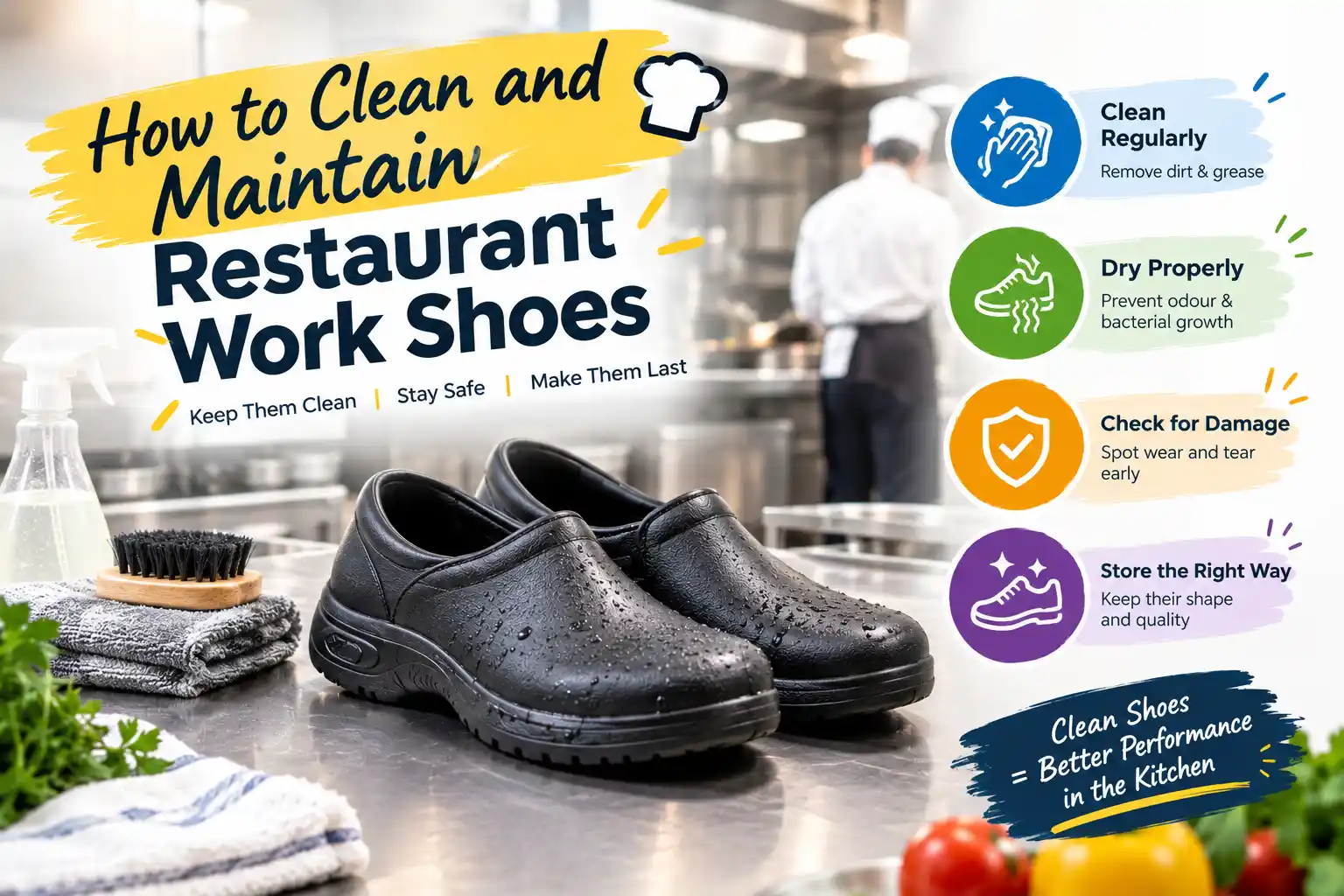
How to Clean and Maintain Restaurant Work Shoes
 17 Oct 2026
Restaurant employees spend long hours standing, walking, carrying supplies, and moving across busy work areas. Choosing the best shoes for restaurant work is important, but proper cleaning and maintenance are equally essential for preserving comfort, traction, and durability. Restaurant footwear is regularly exposed to food particles, grease, water, sauces, cleaning products, and dirt. Without regular care, these substances can build up on the outsole and upper, affecting both hygiene and performance.
A consistent cleaning routine can help work shoes stay fresher and maintain their functional features for longer. Whether you work in a commercial kitchen, dining area, café, bakery, or food preparation environment, knowing how to clean and maintain your footwear is a practical part of workplace care.
Why Cleaning the Best Shoes for Restaurant Work Matters
Restaurant shoes experience conditions that ordinary footwear may not encounter. Grease can accumulate on the outsole, food particles can become trapped in tread patterns, and moisture can remain inside the shoe after a long shift.
Regular cleaning helps remove these contaminants before they become difficult to eliminate. It can also help preserve the outsole's contact with the floor, which is particularly important for slip-resistant footwear.
Dirty footwear may also develop unpleasant odors when moisture and organic residue remain inside for extended periods. Cleaning the exterior and allowing the shoes to dry properly can help maintain a fresher wearing environment.
Maintenance is not simply about appearance. It supports the practical functions that restaurant workers depend on every day, including traction, comfort, and durability.
How to Clean Restaurant Work Shoes Correctly
The appropriate cleaning method depends on the shoe's material and the manufacturer's instructions. Always check the care information before using cleaning products or exposing the footwear to water.
Begin by removing loose dirt and food particles. A soft brush can help remove debris from the upper and tread without unnecessarily damaging the material.
For most washable surfaces, use a mild cleaning solution and a damp cloth or soft brush. Pay particular attention to the outsole because grease and food residue can become trapped in the tread.
Avoid aggressive scrubbing unless the material is designed to tolerate it. Strong chemicals, bleach, solvents, and excessive heat can damage adhesives, coatings, rubber compounds, or synthetic materials.
After cleaning, allow the shoes to dry naturally in a well-ventilated area. Avoid placing them directly against high heat sources because excessive heat can affect the shape and construction.
Best Non Slip Restaurant Shoes Need Regular Care
The best non slip restaurant shoes are designed to provide traction, but even effective slip-resistant footwear requires maintenance. Grease, oil, dirt, and food debris can accumulate in the outsole and potentially affect its contact with the floor.
After a particularly messy shift, inspect the tread before storing the shoes. If grease or residue is visible, clean the outsole rather than allowing it to remain there until the next shift.
Pay attention to the grooves and channels in the tread. A soft brush can help loosen material trapped inside these areas.
Regular inspection is also important. Look for excessive tread wear, cracks, separation, or other damage. Slip resistance can change as an outsole becomes worn, so footwear should be replaced when its functional performance has significantly deteriorated.
Remember that slip-resistant footwear does not eliminate every slipping hazard. Clean floors, prompt spill management, and appropriate workplace procedures remain essential.
Comfortable Shoes for Restaurant Workers and Daily Maintenance
Long restaurant shifts can put substantial stress on the feet. For this reason, comfortable shoes for restaurant workers should be maintained carefully so that their cushioning, fit, and structure remain useful over time.
Moisture management is particularly important. If shoes become wet or heavily damp during work, allow them to dry completely before wearing them again. Wearing damp footwear repeatedly can make the interior uncomfortable and may contribute to odor.
Remove removable insoles if the manufacturer permits it and allow them to air separately. This can help moisture escape from areas that are otherwise difficult to dry.
Inspect the heel, midsole, and upper regularly. If the shoe begins to lose its shape or cushioning, it may no longer provide the same level of comfort it offered when new.
For workers who spend most of their shift standing, maintaining footwear is especially valuable because worn cushioning and poor fit can become increasingly noticeable over several hours.
Waterproof Shoes for Restaurant Work
Water is common in restaurants, particularly around sinks, dishwashing stations, food preparation areas, and cleaning zones. Waterproof shoes for restaurant workers can help protect the feet from moisture when the footwear is designed for that purpose.
However, waterproof footwear still requires proper care. After exposure to water, wipe away surface moisture and allow the shoes to dry naturally. Do not assume that waterproof construction means the shoes can be soaked repeatedly without maintenance.
Inspect seams, closures, and the connection between the upper and outsole. Damage in these areas may eventually compromise water protection.
Cleaning products should also be chosen carefully. Certain chemicals can affect waterproof membranes, coatings, synthetic materials, and adhesives. Follow the manufacturer's cleaning recommendations rather than using household chemicals indiscriminately.
A breathable waterproof shoe can also be more comfortable than footwear that simply blocks moisture while trapping heat and perspiration.
Oil Resistant Restaurant Shoes Require Extra Attention
Restaurants often expose footwear to cooking oil, grease, sauces, and other slippery substances. Oil resistant restaurant shoes can be useful in these environments because their outsole materials are designed to provide resistance to oil exposure.
However, oil-resistant footwear should still be cleaned regularly. Oil residue can remain on the tread and may affect traction depending on the floor conditions and amount of contamination.
After exposure to grease, clean the outsole as soon as reasonably possible. Use the cleaning method recommended for the specific shoe material.
It is also important to understand the difference between oil resistance and complete protection from slipping. Oil-resistant materials do not make a contaminated floor automatically safe. Workplace housekeeping and spill control remain necessary.
A Simple Cleaning Routine After Every Shift
Creating a small maintenance routine can prevent dirt and grease from accumulating. You do not need to perform a deep clean after every shift, but a quick inspection can make regular maintenance easier.
Start by checking the outsole and removing visible debris. Wipe the upper if it has been exposed to food or liquids. If the shoes are damp, place them somewhere ventilated so they can dry naturally.
Two simple maintenance habits are particularly useful:
Daily care: Remove loose dirt, wipe visible spills, inspect the outsole, and allow damp shoes to air dry.
Deep cleaning: Periodically clean the upper and outsole according to the manufacturer's instructions, paying particular attention to tread grooves and areas where grease accumulates.
Keeping a consistent routine is easier than waiting until footwear becomes heavily soiled.
How to Remove Restaurant Grease and Food Residue
Grease is one of the most common contaminants found on restaurant footwear. It can spread across the outsole and collect in small tread grooves.
Begin by removing loose particles with a brush. Then use an appropriate mild cleaning solution for the shoe material. Work carefully around the tread rather than aggressively scrubbing the upper.
If food residue has dried onto the shoe, gently loosen it instead of scraping forcefully. Sharp tools can damage the surface and create areas where dirt can accumulate later.
After cleaning, rinse or wipe according to the manufacturer's instructions and allow the footwear to dry naturally.
Do not experiment with industrial degreasers unless the shoe manufacturer specifically states that they are suitable. A product that removes grease effectively can still damage the footwear.
When Should Restaurant Work Shoes Be Replaced?
Even with good maintenance, work shoes eventually wear out. Knowing when to replace them is just as important as cleaning them.
Look at the outsole first. If the tread has become significantly smoother, cracked, or damaged, the shoe may no longer provide the same traction. Also inspect the midsole for compression and the upper for tears or separation.
Comfort can be another indicator. If a shoe that was previously supportive begins to feel flat, unstable, or uncomfortable during a normal shift, its cushioning or structure may have deteriorated.
Consider replacing footwear when you notice:
Significantly worn or smooth tread
Cracks or separation in the outsole
Damaged seams or upper materials
Persistent moisture problems
Loss of cushioning or support
Changes in fit or stability
The exact lifespan depends on working hours, floor conditions, cleaning frequency, materials, and individual usage.
Storing Restaurant Shoes Properly
How you store your footwear between shifts can affect its condition. Avoid leaving damp shoes inside a closed bag or locker for extended periods.
Instead, allow them to air out in a clean, dry, ventilated location. If you use more than one pair, rotating them can give each pair additional time to dry between shifts.
Keep footwear away from unnecessary heat and direct exposure to harsh chemicals. Store it in a way that prevents the upper from becoming crushed or permanently distorted.
Proper storage is particularly useful for workers who have long shifts and wear their footwear frequently.
Choosing and Maintaining the Best Shoes for Restaurant Work
The best shoes for restaurant employees should be selected according to the actual demands of the workplace. A busy commercial kitchen may require stronger traction and oil resistance, while a front-of-house worker may place greater emphasis on cushioning, appearance, and lightweight construction.
Whatever type of footwear you choose, maintenance should be part of your regular routine. Cleaning the outsole, removing grease, drying the interior, inspecting tread, and following care instructions can help preserve important footwear characteristics.
Work-focused footwear from brands such as Futsran can also be evaluated according to factors such as traction, comfort, water protection, durability, and ease of maintenance.
Conclusion
The best shoes for restaurant work need regular care to maintain their comfort, grip, and durability. Cleaning away grease, food residue, and dirt can help keep the outsole functional, while proper drying and storage can improve everyday comfort. Regular inspections can also help identify worn tread, damaged materials, or reduced cushioning before footwear becomes unsuitable for demanding shifts.
A simple maintenance routine takes only a few minutes but can make restaurant footwear easier to wear and maintain. Always follow the manufacturer's care instructions and replace shoes when their important performance features have significantly deteriorated.
FAQs
1. How often should restaurant work shoes be cleaned?
Wipe and inspect them after each shift, with deeper cleaning as needed based on exposure to grease and dirt.
2. Can I put restaurant shoes in a washing machine?
Only if the manufacturer specifically states that machine washing is suitable for the footwear.
3. How do I clean grease from restaurant shoes?
Remove loose residue first, then use a suitable mild cleaning solution according to the shoe's care instructions.
4. Do waterproof restaurant shoes need maintenance?
Yes. Clean them regularly, inspect their construction, and allow them to dry properly after exposure to moisture.
5. When should restaurant work shoes be replaced?
Replace them when the tread, cushioning, structure, or protective features become significantly worn or damaged.