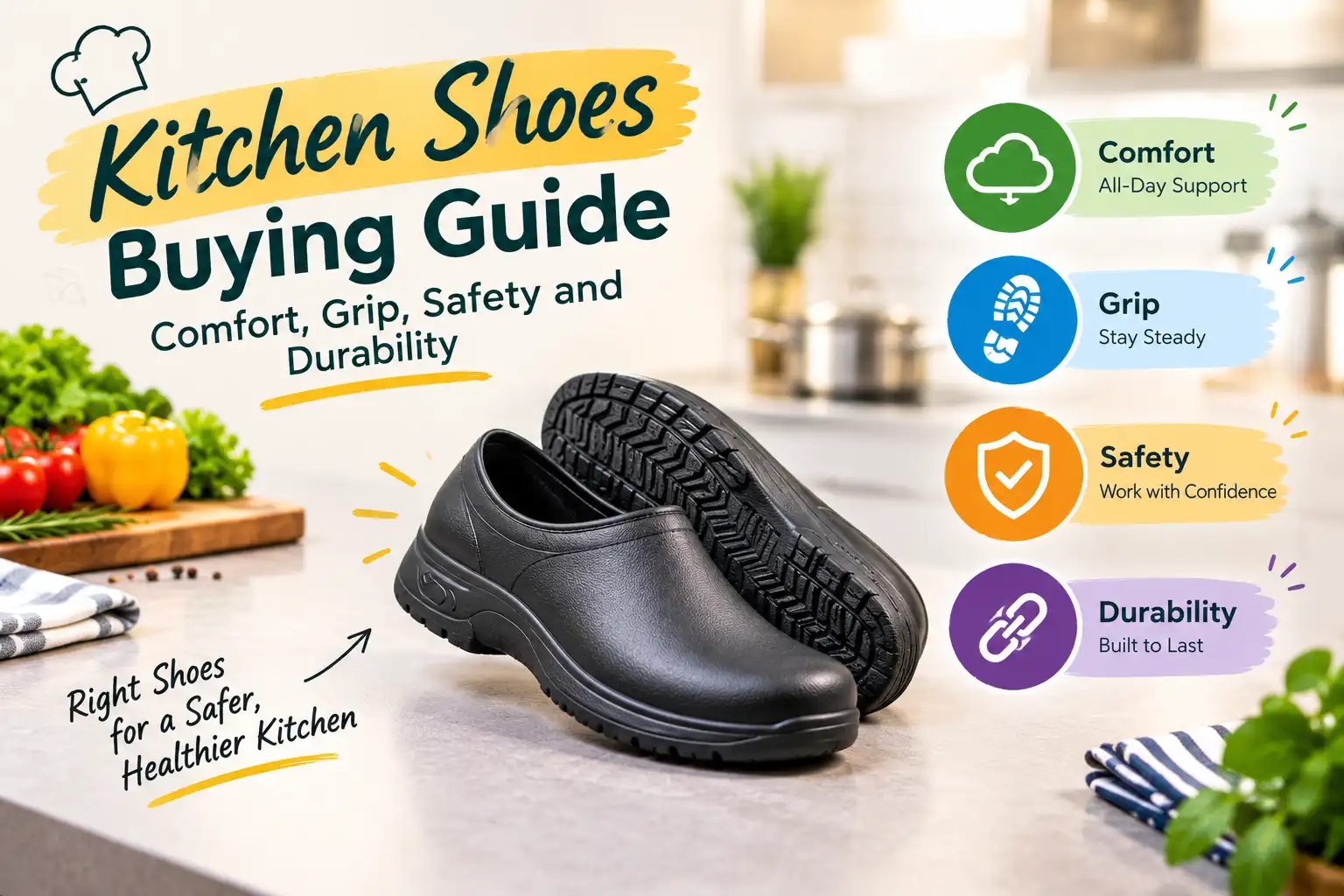
Kitchen Shoes Buying Guide: Comfort, Grip, Safety and Durability
 16 Oct 2026
Choosing the best shoes for kitchen work requires more than picking a pair that looks comfortable. Kitchen professionals spend long hours standing, walking, bending, lifting, and moving quickly across floors that may become wet or greasy. The right footwear should provide dependable grip, cushioning, support, protection, and durability while remaining comfortable throughout a demanding shift. Whether you work in a restaurant, hotel, bakery, café, or commercial kitchen, understanding the key features of kitchen footwear can help you make a practical choice.
Why Choosing the Best Shoes for Kitchen Work Matters
Kitchen environments are different from ordinary workplaces. Water, oil, food particles, cleaning solutions, and spilled ingredients can create challenging floor conditions. At the same time, chefs, cooks, servers, and kitchen staff may spend several hours continuously on their feet.
Poorly designed footwear can contribute to discomfort, tired feet, pressure points, and reduced stability. Shoes that lack adequate traction can also make walking across wet or greasy floors more difficult.
The best shoes for kitchen work should therefore balance several factors rather than focusing on just one feature. Slip resistance, comfort, fit, water protection, durability, and appropriate safety features all deserve attention.
A good pair should feel secure without being restrictive and provide enough cushioning to support repeated standing and walking.
How to Choose the Best Shoes for Kitchen Work
Before purchasing kitchen footwear, think about your daily work environment. A professional chef may need different features from someone working in a bakery or food preparation area.
Start by considering the floor conditions. If your workplace frequently has water or grease on the floor, traction should be a major priority. If you work long shifts, cushioning and arch support become equally important.
Also consider how frequently the shoes will be exposed to cleaning products and moisture. Materials that are easy to wipe clean can make daily maintenance more convenient.
Here are two groups of features to evaluate:
Safety and protection: Look for slip-resistant outsoles, suitable tread patterns, water-resistant construction, durable materials, and protective features appropriate to your workplace hazards.
Comfort and performance: Consider cushioning, arch support, breathable materials, secure heel fit, adequate toe room, lightweight construction, and flexibility for frequent movement.
The right combination will depend on your job responsibilities and the conditions in your kitchen.
Comfortable Kitchen Shoes for Long Shifts
Long hours on hard kitchen floors can place significant pressure on the feet. For this reason, comfortable kitchen shoes should provide sufficient cushioning without feeling excessively soft or unstable.
A supportive footbed can help distribute pressure more evenly. Cushioning in the midsole may also help absorb some of the impact created during walking and repeated movement.
Arch support is another consideration. The arch helps support body weight and contributes to natural foot mechanics. Shoes with an appropriately supportive footbed can provide a more stable foundation during extended standing.
Fit is just as important as cushioning. A shoe that is too narrow may create pressure around the toes, while an overly loose shoe may move around inside the foot. Look for a secure heel, comfortable toe space, and a fit that allows natural movement.
Breathability can also improve comfort. Kitchen environments can become warm, particularly during busy cooking periods. Materials that allow appropriate airflow may help reduce excessive heat and moisture inside the shoe.
Grip and Slip Resistance Should Be a Priority
One of the most important features of professional kitchen footwear is traction. Floors may become slippery because of spilled water, cooking oil, sauces, grease, or cleaning products.
A slip-resistant outsole is designed to provide better grip on suitable workplace surfaces. Tread patterns can help manage contact between the outsole and the floor, while the rubber compound can influence traction.
However, no shoe can completely eliminate slipping. Floor maintenance, immediate spill cleanup, proper cleaning procedures, and safe movement remain essential.
When comparing different shoes, check whether the manufacturer provides information about slip resistance and the conditions in which the footwear has been tested. Do not assume that a visibly deep tread automatically means superior traction.
Waterproof Kitchen Shoes for Wet Environments
Water exposure is common in commercial kitchens. Employees may work around sinks, dishwashing stations, wet floors, and cleaning areas throughout the day.
Waterproof kitchen shoes can help prevent water from reaching the feet and may be especially useful for workers who regularly operate in wet areas. Keeping feet dry can improve comfort during long shifts and reduce the inconvenience associated with moisture entering the footwear.
When evaluating waterproof construction, pay attention to the entire shoe rather than only the upper material. Seams, openings, tongues, and closures can influence how effectively water is kept out.
It is also useful to distinguish between water-resistant and waterproof footwear. These terms are not necessarily interchangeable, so check the manufacturer's specifications before purchasing.
Water protection should also be balanced with breathability. Shoes that trap excessive heat and perspiration may become uncomfortable even when they perform well against external moisture.
Kitchen Work Shoes Need Durability
Kitchen footwear is exposed to constant movement, frequent cleaning, moisture, and demanding floor conditions. Consequently, durability is an important part of the buying decision.
Kitchen work shoes should be constructed from materials capable of handling repeated daily use. The outsole should resist excessive wear, while the upper should tolerate regular cleaning without quickly deteriorating.
Pay attention to stitching, sole attachment, heel construction, and overall build quality. A well-constructed shoe can maintain its fit and performance for longer when properly maintained.
Daily care also makes a difference. Remove food particles and dirt from the outsole, clean the upper according to the manufacturer's instructions, and allow wet footwear to dry appropriately.
Avoid using harsh chemicals unless the manufacturer specifically recommends them. Certain cleaning agents can damage rubber compounds, synthetic materials, adhesives, or protective coatings.
Safety Features to Consider Before Buying
Kitchen work involves more than slip hazards. Depending on the workplace, employees may encounter hot liquids, heavy equipment, sharp objects, dropped utensils, and other potential risks.
The safety features you need depend on your job and workplace requirements. Some workers may benefit from protective toe construction, while others may prioritize lightweight slip-resistant footwear.
Consider these questions before purchasing:
Does the outsole provide appropriate traction for your kitchen floor?
Is the shoe suitable for wet or greasy working conditions?
Does it provide enough cushioning for your typical shift?
Is the heel secure without excessive pressure?
Does the toe area allow natural movement?
Can the material be cleaned easily?
Is the footwear durable enough for frequent daily use?
Does it meet any safety requirements specified by your employer?
Choosing footwear based on actual workplace conditions is more useful than selecting a shoe simply because it is marketed for kitchen use.
Finding the Right Fit for Kitchen Work
Even technically advanced footwear can become uncomfortable if it does not fit correctly. Your feet may also swell slightly after prolonged standing, so comfort should be assessed with the socks you normally wear at work.
The heel should stay relatively secure when walking, while the forefoot should have enough room for natural toe movement. Your toes should not press against the front of the shoe.
Try walking, turning, and bending while wearing the footwear. Kitchen work involves frequent changes in direction, so stability should be assessed during movement rather than only while standing still.
If you experience persistent pain, numbness, or other foot problems, consider seeking professional advice rather than assuming different footwear alone will solve the issue.
How to Maintain Kitchen Footwear
Proper maintenance can help preserve traction, comfort, and durability. Kitchen shoes frequently collect grease, food particles, dust, and cleaning residue, particularly around the outsole.
Clean the shoes regularly and inspect the tread for excessive wear. A worn outsole may provide less traction than it did when new.
Useful maintenance practices include:
Clean the outsole regularly to remove grease and debris.
Follow the manufacturer's cleaning instructions.
Let wet footwear dry properly before extended use.
Check the sole and upper for damage.
Replace shoes when the tread or cushioning has significantly deteriorated.
Avoid exposing footwear to unnecessary heat, as excessive temperatures may damage adhesives and materials.
How to Compare Different Kitchen Shoes
When comparing several options, avoid focusing exclusively on price or appearance. A less expensive shoe may become costly if it needs frequent replacement, while a premium shoe may not be suitable if its design does not match your working environment.
Instead, compare the features that directly affect your daily experience. Consider traction, cushioning, fit, water protection, durability, maintenance requirements, and any workplace safety standards.
Brands such as Futsran offer work-focused footwear that can be evaluated according to these practical requirements. The important thing is to match the shoe's specifications to your actual kitchen conditions.
Conclusion
Finding the best shoes for kitchen work means considering the complete footwear design rather than choosing based on appearance alone. Reliable traction, comfortable cushioning, suitable support, water protection, durability, and a secure fit can all contribute to more practical work footwear.
Whether you spend your day preparing food, cooking, washing dishes, or managing a busy commercial kitchen, your shoes need to handle the conditions you regularly encounter. Focus on the features that match your workplace, maintain your footwear properly, and replace it when its grip, support, or structure begins to deteriorate.
FAQs
1. What should I look for in kitchen shoes?
Prioritize slip resistance, comfort, proper fit, durability, cushioning, and suitable water protection.
2. Are waterproof shoes useful in kitchens?
Yes. They can help protect feet from water during cleaning, dishwashing, and other wet tasks.
3. Why is slip resistance important for kitchen workers?
Kitchen floors can become wet or greasy, so suitable traction can help provide better grip.
4. How should kitchen shoes fit?
They should hold the heel securely while providing enough room for comfortable toe movement.
5. How often should kitchen shoes be replaced?
Replace them when the outsole loses significant tread, cushioning deteriorates, or the footwear becomes damaged or uncomfortable.