Kitchen Shoes vs Regular Work Shoes: What’s the Difference?
 18 Sep 2026
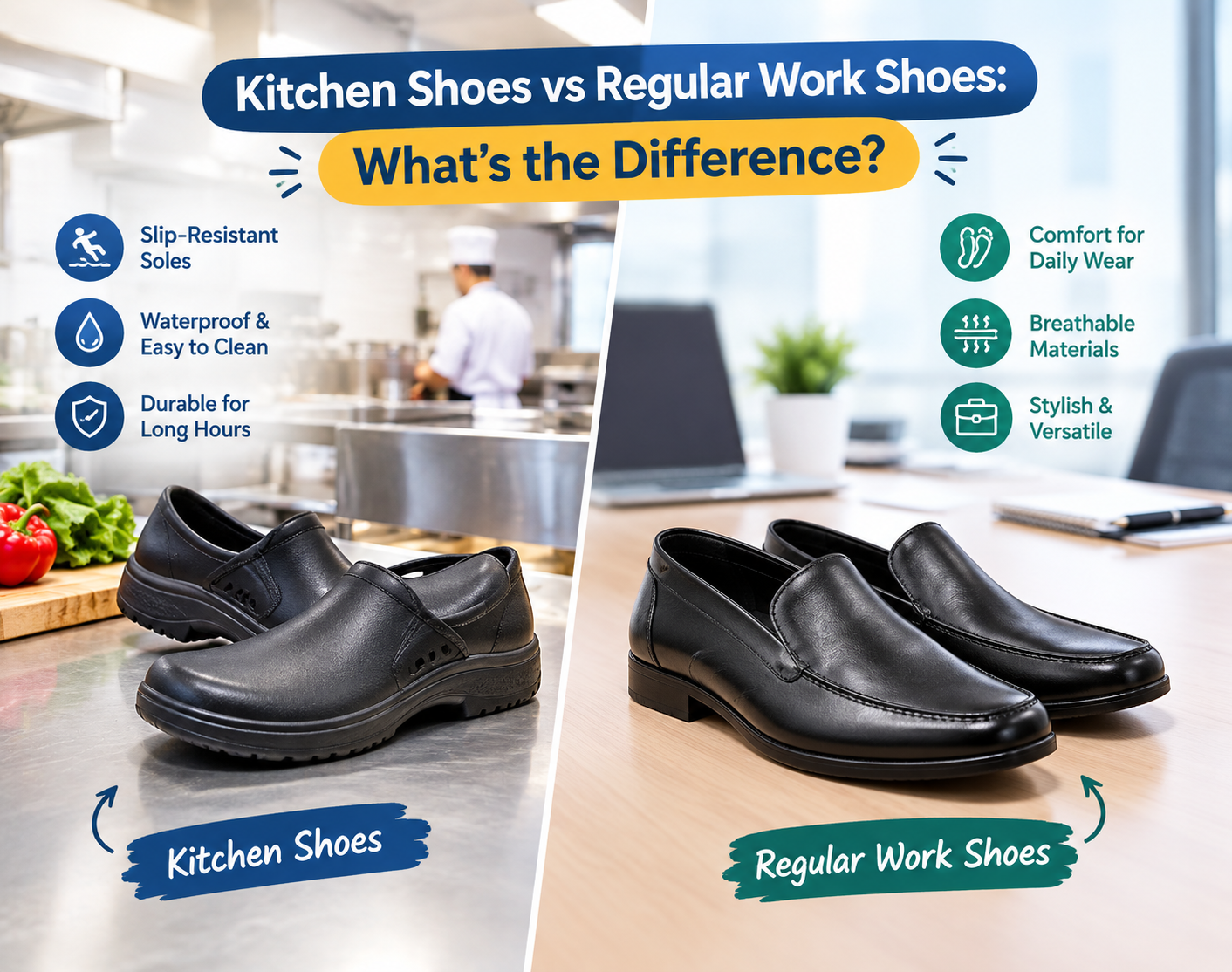
Choosing the right footwear can make a noticeable difference when your job requires standing, walking, and moving for several hours. The best shoes for kitchen environments are made to handle conditions that ordinary work shoes may not, including wet floors, grease, spills, heat, and constant movement. While regular work shoes can work well in offices, warehouses, and other general workplaces, kitchen footwear gives greater attention to slip resistance, comfort, easy cleaning, and everyday protection.
For chefs, cooks, kitchen assistants, bakers, and restaurant staff, the right footwear is an important part of workplace safety and comfort. Understanding how kitchen-specific shoes differ from regular work shoes can help you choose footwear based on your actual working conditions instead of focusing only on appearance or price.
What Are Kitchen Shoes?
Kitchen shoes are work footwear designed for food preparation areas, commercial kitchens, restaurants, bakeries, and similar environments. These workplaces often have hard flooring and may involve spilled liquids, cooking oils, food debris, cleaning solutions, and long periods of standing.
Unlike casual sneakers, kitchen footwear usually features traction-focused outsoles and durable materials. These features are intended to provide better stability while workers move between cooking stations, preparation counters, sinks, storage areas, ovens, and refrigerators.
Good kitchen footwear should also remain comfortable during extended shifts. Restaurant employees can spend eight or more hours on their feet, making cushioning, arch support, heel stability, and proper fit important considerations. A well-designed option from a work-footwear brand such as Futsran can combine practical protection with comfort for demanding work environments.
What Are Regular Work Shoes?
Regular work shoes are a broad category of footwear designed for different occupations and workplace conditions. Depending on the profession, they may prioritize durability, protection, formal appearance, lightweight construction, or general comfort.
For example, an office employee may need professional-looking footwear, while a warehouse worker may need reinforced shoes for handling equipment and heavy materials. These shoes can perform well in their intended environments but may not be designed for the specific conditions found inside commercial kitchens.
This is why selecting a durable work shoe does not automatically mean that it is suitable for restaurant or kitchen work. The footwear should match the hazards and physical demands of the workplace.
Best Shoes for Kitchen vs Regular Work Shoes: Key Differences
The main difference between kitchen footwear and regular work footwear is the environment each type is designed to handle. A commercial kitchen can combine moisture, grease, heat, hard flooring, food debris, and fast-paced movement during the same shift.
The best shoes for kitchen work should therefore provide a practical balance of traction, comfort, durability, and protection. Regular work shoes may include some of these features, but they are not always designed for repeated exposure to wet or greasy kitchen surfaces.
Slip Resistance
Slip resistance is one of the most important factors when choosing kitchen footwear. Kitchen floors can become slippery because of water, cooking oil, sauces, cleaning products, and food ingredients.
Kitchen-specific footwear commonly uses rubber outsoles and tread patterns designed to improve grip. The outsole can help workers maintain traction when moving across potentially slippery surfaces.
Regular work shoes may provide good traction on dry floors but may not offer the same performance on greasy or wet kitchen flooring. Always check the manufacturer's intended-use information instead of assuming that every work shoe is suitable for a commercial kitchen.
Comfort During Long Shifts
Restaurant employees often spend most of their working day standing or walking. Constant pressure on the feet can contribute to tired heels, sore arches, and general discomfort.
Comfortable kitchen shoes generally place greater emphasis on cushioning, support, and stability. A supportive midsole can help absorb impact, while a properly shaped footbed can distribute pressure more evenly across the foot.
Regular work shoes can also provide cushioning, but their comfort features vary depending on the occupation they are designed for. Footwear intended for occasional walking may not offer the support needed during a long kitchen shift.
Water Resistance and Easy Maintenance
Spills are common in food preparation areas. Water, sauces, oils, and other liquids can quickly come into contact with footwear.
Waterproof kitchen shoes can provide additional protection against moisture, although the actual level of water protection depends on the shoe's construction and materials. Water-resistant footwear may be sufficient for some workplaces, while kitchens with frequent liquid exposure may require stronger protection.
Easy maintenance is another useful feature. Smooth or treated outer surfaces can make it easier to wipe away food residue, spills, and other debris. Regular work shoes may use materials that are less practical for frequent cleaning.
Durability
Kitchen floors and repeated movement can place significant stress on footwear. Workers may constantly walk, turn, bend, stand, and move between different areas during their shifts.
Quality kitchen work shoes are designed with these repetitive demands in mind. Durable uppers, reinforced stitching, sturdy outsoles, and dependable bonding can help extend the useful life of the footwear.
Regular work shoes can also be durable, but their construction may be optimized for different working conditions. The right option depends on how and where the shoes will actually be used.
Protection
Protection requirements can differ from one kitchen to another. Restaurant workers may encounter dropped utensils, heavy containers, hot liquids, and kitchen equipment.
Some kitchen footwear includes reinforced sections or additional protective features, while other designs focus mainly on slip resistance and comfort. If your workplace requires certified protective footwear, always check the applicable safety specifications before purchasing.
Regular work shoes may provide stronger protection in certain categories, but that does not automatically mean they offer the traction and moisture management required in a kitchen.
Features to Look for in the Best Shoes for Kitchen
When comparing footwear options, consider your daily responsibilities instead of focusing only on appearance. A chef working near cooking stations may have different requirements from a bakery employee, dishwasher, kitchen assistant, or restaurant server.
Here are some important features to check:
Slip-resistant outsole with a suitable tread pattern
Cushioned footbed and supportive midsole
Secure heel and comfortable toe box
Water-resistant or waterproof construction where appropriate
Durable materials for frequent workplace use
Easy-to-clean outer surfaces
Lightweight construction for easier movement
Adequate breathability for warm kitchen environments
The best shoes for kitchen work should feel stable while walking and comfortable while standing. They should not create excessive pressure around the toes, heel, or arch. Proper sizing is equally important because even a feature-rich shoe may become uncomfortable if it does not fit correctly.
When Are Regular Work Shoes a Better Choice?
Regular work shoes are not necessarily unsuitable for every workplace. They can be a practical choice when the environment does not involve significant exposure to liquid, grease, food residue, or other kitchen-related hazards.
For example, people working in offices, retail environments, dry storage areas, and relatively clean workplaces may benefit from footwear designed specifically for those conditions.
The key is matching the shoe to the environment. If you work in a commercial kitchen every day, footwear designed around kitchen-related hazards may be more practical than selecting a general-purpose work shoe simply because it appears durable.
How to Choose Between Kitchen and Regular Work Shoes
Start by identifying the main hazards and physical demands of your workplace. Think about how frequently the floor becomes wet, whether grease is present, how many hours you spend standing, and whether your employer has specific footwear requirements.
Next, evaluate the fit. Even specialized footwear can become uncomfortable if the size or shape does not suit your feet. Your toes should have enough space to move naturally, while the heel should remain secure as you walk.
Pay attention to the condition of the outsole as well. Even a slip-resistant shoe can lose some of its effectiveness when the tread becomes significantly worn. Regular cleaning can also help maintain traction by removing grease and debris from the sole.
Finally, consider long-term value rather than choosing solely on the lowest purchase price. A supportive and durable pair that performs reliably during long shifts may provide better value than footwear that requires frequent replacement.
Common Mistakes to Avoid
Buying kitchen footwear based only on appearance is one of the most common mistakes. A stylish shoe may look appealing but still lack the traction, support, or protection required for a demanding kitchen environment.
Another mistake is assuming that every “work shoe” is automatically suitable for kitchen use. Work footwear is designed for many industries, so its specific features and intended applications should always be checked.
Ignoring fit can also create problems. Shoes that are too tight may cause pressure and discomfort, while loose footwear can reduce stability. Workers should also avoid continuing to use shoes when the outsole is significantly worn or when cushioning and structural support have deteriorated.
Final Thoughts
The difference between kitchen shoes and regular work shoes mainly comes down to the conditions they are designed to handle. Kitchen footwear generally places greater emphasis on traction, moisture management, easy maintenance, long-shift comfort, and practical durability.
If you regularly work around spills, grease, hard flooring, and demanding schedules, choosing footwear suited to that environment can make everyday work more comfortable and secure. Ultimately, the best shoes for kitchen use are the ones that provide the right combination of grip, support, fit, durability, and protection for your specific workplace.
Frequently Asked Questions
1. Are kitchen shoes better than regular work shoes?
For commercial kitchens, purpose-designed kitchen shoes are generally more suitable because they are developed around traction, comfort, and spill-prone working conditions.
2. Are kitchen shoes always waterproof?
No. Some kitchen shoes are waterproof, while others are only water-resistant. Always check the manufacturer's specifications before purchasing.
3. Why is slip resistance important in kitchen footwear?
Kitchen floors can become wet or greasy, increasing the possibility of slips. A suitable slip-resistant outsole can provide better traction on these surfaces.
4. Can I wear regular sneakers in a kitchen?
Regular sneakers may not provide sufficient slip resistance, protection, or durability for demanding kitchen environments. Check your workplace requirements before choosing footwear.
5. How long should kitchen work shoes last?
The lifespan depends on usage, cleaning, construction, and workplace conditions. Replace them when the outsole, cushioning, or structural support becomes significantly worn.