Why Comfort and Arch Support Matter in Chef Shoes
 06 Oct 2026
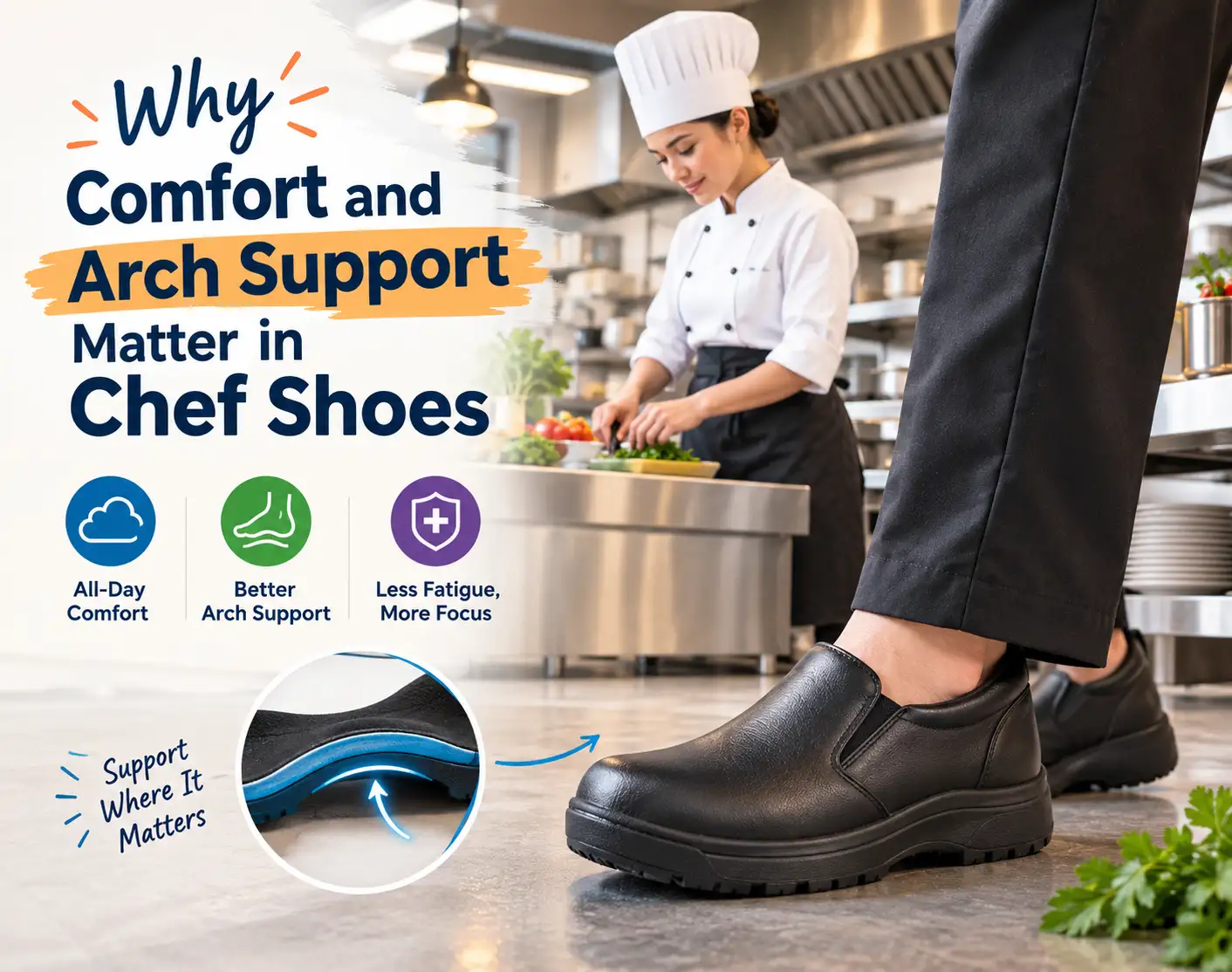
Long kitchen shifts demand footwear that can handle heat, spills, constant movement, and hours of standing. Choosing the Best shoes for chef is not only about finding durable footwear; comfort, arch support, cushioning, and stability can make a major difference in how your feet feel throughout a busy service. The right chef shoes should support natural movement while helping reduce pressure on the feet, ankles, and legs.
Why Comfort Matters in the Best shoes for chef
Chefs and kitchen professionals can spend most of their working day standing, walking, turning, lifting, and moving quickly between workstations. Unlike ordinary casual shoes, professional kitchen footwear needs to provide consistent support under demanding conditions.
Poorly cushioned footwear can contribute to foot fatigue, discomfort, and soreness after several hours. A comfortable design helps distribute pressure more evenly across the sole of the foot. This becomes particularly important during long shifts when the same areas of the feet are repeatedly exposed to pressure.
The ideal chef shoe should also allow enough room for the toes to move naturally. A cramped toe box can cause rubbing and discomfort, while footwear that is too loose may reduce stability. Breathable materials, moisture management, padded collars, and flexible construction can further improve the overall wearing experience.
Comfort should therefore be considered a performance feature rather than simply a luxury.
How Arch Support Improves Chef Footwear
Arch support plays an important role in maintaining a stable and comfortable foot position. The arch helps distribute body weight and absorb some of the forces created while walking and standing. When footwear provides appropriate support, it can help maintain better alignment and reduce excessive pressure on certain parts of the foot.
For kitchen professionals, this matters because standing for extended periods places continuous load on the feet. Shoes with supportive midsoles and structured footbeds can provide a more stable foundation throughout the workday.
Arch support also works together with cushioning. Cushioning helps absorb impact, while the footbed and midsole provide structure. Neither feature should be considered in isolation. A well-designed shoe balances softness with sufficient stability.
However, everyone's feet are different. People with specific foot conditions or persistent pain may require professional assessment and individually appropriate footwear or orthotic support.
Best shoes for chef: Key Features to Look For
When comparing professional kitchen footwear, look beyond appearance. A shoe can look stylish while failing to provide the support needed for a demanding kitchen environment.
Here are two major categories of features worth checking:
Comfort and support: Look for a cushioned insole, supportive footbed, adequate arch structure, shock-absorbing midsole, roomy toe box, secure heel fit, and comfortable upper. These features can make long periods of standing easier on the feet.
Kitchen protection: Consider slip resistance, durable construction, easy-to-clean materials, appropriate traction, and a secure outsole. These features are especially useful in environments where water, oil, food debris, and other substances may reach the floor.
The overall fit is equally important. Even highly supportive footwear may become uncomfortable if the size or shape does not suit your foot. Try shoes with the type of socks you normally wear at work and check for sufficient toe room without excessive movement inside the shoe.
Why Anti-Slip Protection Is Essential in a Kitchen
Kitchen floors can become slippery because of water, oil, grease, sauces, food particles, and cleaning solutions. Rapid movement in such an environment makes traction an important part of workplace footwear.
Good anti slip shoes for chef should have an outsole designed to maintain grip on common kitchen surfaces. Tread patterns and rubber compounds can influence traction, although actual performance depends on the floor condition and contamination present.
Slip-resistant footwear does not eliminate the risk of falling. Safe kitchen practices, regular floor cleaning, proper housekeeping, and appropriate workplace procedures remain essential.
When evaluating the Best anti slip shoes for chef, chefs should consider both traction and comfort. A shoe that offers excellent grip but causes severe discomfort may still be unsuitable for a long shift.
Safety Shoes for Chef: Protection Beyond Comfort
Comfort is important, but professional kitchen footwear also needs to provide suitable protection. Depending on the workplace, chefs may benefit from footwear designed to protect against common hazards such as accidental impacts, spills, and slippery surfaces.
Safety shoes for chef may include features such as reinforced construction, protective toe areas, slip-resistant outsoles, and durable uppers. The exact protection required depends on the kitchen environment and workplace safety standards.
A busy commercial kitchen may expose workers to heavier equipment, dropped objects, hot liquids, and wet floors. Therefore, footwear should be selected according to the actual risks present rather than based solely on appearance.
Kitchen Safety Shoes for Chef and Long Working Hours
Professional kitchens require footwear that can withstand repeated movement throughout the day. Kitchen safety shoes for chef should combine reliable traction with a stable, comfortable construction that supports everyday work.
Weight is another factor worth considering. Heavy footwear can feel increasingly tiring during long shifts, particularly when workers are constantly walking. Lightweight designs can make movement easier, provided they still offer adequate protection and stability.
The outsole should also be durable enough for frequent use. Kitchen footwear is exposed to moisture, cleaning products, food residue, and repeated flexing. Easy-to-clean surfaces can make daily maintenance more convenient and help keep the footwear hygienic.
Choosing Comfortable Shoes for Chef Based on Your Work Routine
Not every chef has the same footwear requirements. A pastry chef working in a quieter environment may have different needs from a line cook working through several intense dinner services.
Comfortable shoes for Chef should be selected according to shift duration, floor conditions, movement requirements, and individual foot shape. Someone who spends ten or more hours standing may prioritize cushioning and arch support, while someone moving rapidly around a large kitchen may place greater emphasis on traction and stability.
Pay attention to how your feet feel during and after work. Persistent soreness, pressure points, numbness, or discomfort may indicate that the footwear does not fit properly or that another underlying issue needs attention.
What Makes a Chef Shoe Suitable for Everyday Kitchen Work?
A practical chef shoe should balance several characteristics instead of focusing on a single feature. A comfortable footbed is useful, but it should work alongside a stable outsole. Slip resistance is valuable, but the shoe should also fit securely. Durability matters, but excessive weight can make long shifts more tiring.
Consider these factors when making your choice:
Fit: The heel should remain secure without excessive pressure, while the toes should have enough room to move.
Arch support: The footbed should provide comfortable support appropriate to your foot shape.
Cushioning: Adequate cushioning can help manage pressure during prolonged standing.
Traction: A slip-resistant outsole can provide better grip on potentially wet or greasy floors.
Durability: Materials should tolerate frequent cleaning and demanding kitchen conditions.
Ease of maintenance: Wipeable and water-resistant materials can simplify everyday care.
Weight: Lightweight construction may help reduce fatigue during extended movement.
Breathability: Suitable ventilation can improve comfort during long shifts.
Some professional options, including Futsran footwear, are designed around the practical demands of work environments where standing, movement, and floor safety are everyday concerns.
How to Get the Most From Your Chef Shoes
Even high-quality footwear needs proper care. Allow shoes to dry naturally after exposure to moisture and clean them according to the manufacturer's recommendations. Regularly inspect the outsole for excessive wear because worn tread can affect traction.
It is also useful to replace footwear when cushioning, support, or grip has noticeably deteriorated. A shoe does not necessarily need to look damaged externally before its functional performance begins to decline.
Most importantly, do not ignore persistent foot discomfort. If pain continues despite changing footwear, consult an appropriate healthcare professional for individual guidance.
Conclusion
The Best shoes for chef should provide more than a professional appearance. Comfort, arch support, cushioning, secure fit, durability, and reliable traction all contribute to better everyday kitchen footwear. Since chefs spend long hours standing and moving on demanding surfaces, choosing footwear that matches their working environment can make daily shifts more comfortable and practical.
Rather than selecting shoes based on one feature alone, consider how the complete design supports your feet and responds to the conditions of your kitchen. The right combination of comfort, stability, and protection can help your footwear work as hard as you do.
FAQs
1. Why is arch support important in chef shoes?
Arch support helps distribute pressure across the foot and provides a more stable foundation during prolonged standing and walking.
2. Are anti-slip shoes necessary for chefs?
They are highly useful because professional kitchens can have wet, greasy, or contaminated floors where traction is important.
3. What makes comfortable chef shoes?
Cushioning, proper fit, arch support, a supportive footbed, suitable flexibility, and breathable materials can improve comfort.
4. Should chef shoes be lightweight?
Generally, lightweight footwear can make prolonged walking and standing less tiring, provided it still provides suitable support and protection.
5. How often should chef shoes be replaced?
Replacement depends on usage and condition. Consider replacing them when cushioning, structural support, or outsole traction has significantly deteriorated.