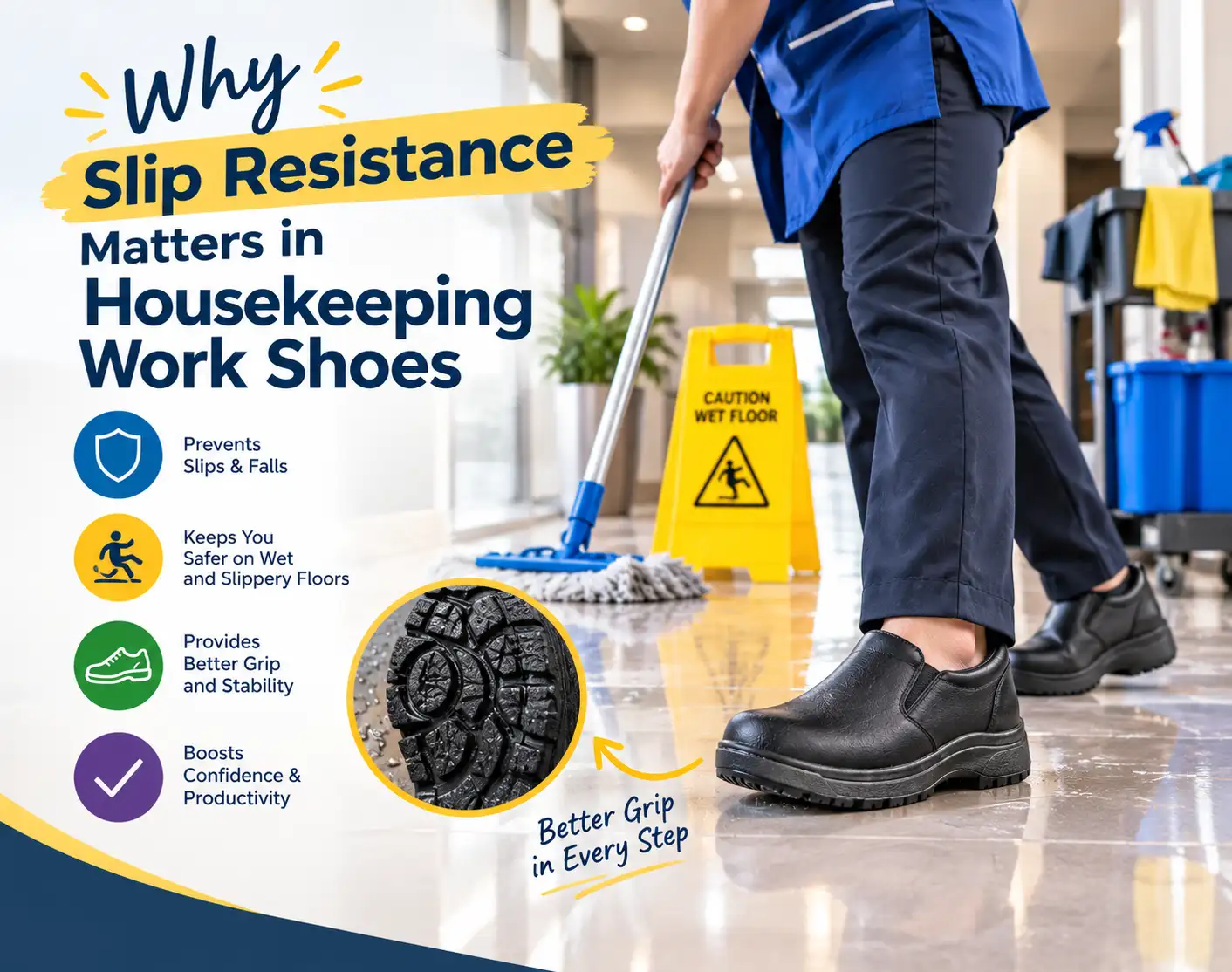
Why Slip Resistance Matters in Housekeeping Work Shoes
 07 Oct 2026
Housekeeping professionals spend long hours walking, standing, bending, carrying supplies, and working across different surfaces. In these demanding conditions, choosing the right oil and water proof housekeeping shoes is about more than keeping feet dry. Proper slip resistance can provide better traction on wet or contaminated floors, while waterproof and oil-resistant construction can help footwear handle common housekeeping challenges. The right work shoes should combine grip, comfort, durability, and practical protection for everyday tasks.
Why Slip Resistance Is Important in Housekeeping Work
Housekeeping environments can quickly become slippery. Water from bathrooms, cleaning solutions, spills, polished floors, and other liquids may reduce traction underfoot. When workers move between rooms while carrying equipment or supplies, losing balance can become a serious workplace concern.
Slip-resistant footwear is designed to provide better grip between the outsole and the walking surface. The outsole pattern, rubber compound, tread depth, and overall shoe construction can all influence traction.
For housekeeping staff, this is particularly important because work often involves moving quickly from one task to another. A reliable outsole can help provide greater stability when walking across potentially wet surfaces.
However, footwear alone cannot eliminate slip hazards. Proper housekeeping procedures, prompt spill cleanup, suitable floor maintenance, and workplace safety practices remain essential.
Oil and Water Proof Housekeeping Shoes for Everyday Protection
The term oil and water proof housekeeping shoes generally refers to work footwear designed to resist water penetration while also providing protection against exposure to oily or greasy substances. This combination can be particularly useful in workplaces where cleaning products, food residue, oils, and liquids may come into contact with the floor.
Water-resistant or waterproof construction can help keep feet dry when working around wet areas. Oil-resistant materials and outsoles can help footwear maintain its functional properties when exposed to certain oily substances.
It is important to understand that "waterproof" and "oil-proof" can describe different aspects of shoe performance. A waterproof upper may prevent water from entering through the material, while an oil-resistant outsole is intended to resist degradation and maintain traction when exposed to oils. Always check the manufacturer's specifications to understand the actual level of protection.
How Non-Slip Housekeeping Shoes Improve Stability
Non-Slip Housekeeping Shoes are designed to provide improved traction compared with ordinary casual footwear. Their outsoles typically feature tread patterns that help increase contact and grip on common workplace surfaces.
Housekeepers may encounter different flooring materials throughout a shift, including ceramic tiles, marble, vinyl, laminate, concrete, and polished surfaces. Each surface can behave differently when wet or contaminated.
A well-designed outsole can help workers maintain more consistent footing while walking, turning, or carrying items. This is particularly valuable in areas such as bathrooms, kitchens, hotel corridors, laundry rooms, and other frequently cleaned spaces.
Still, slip-resistant footwear should be viewed as one part of a broader safety approach. The effectiveness of any shoe depends on the surface, contamination, wear condition, and how the footwear is used.
Waterproof Housekeeping Shoes for Wet Work Areas
Housekeeping frequently involves exposure to water. Cleaning bathrooms, mopping floors, washing surfaces, and handling wet equipment can expose footwear to moisture throughout the day.
Waterproof Housekeeping Shoes can help reduce water penetration and keep feet more comfortable during wet tasks. Dry feet can also help reduce the discomfort associated with prolonged exposure to moisture.
When choosing waterproof work shoes, look beyond the label. Examine the construction of the upper, seams, tongue area, and closure system. Water can enter through openings or poorly protected seams even when the main material is water-resistant.
Breathability is another consideration. A shoe that keeps external moisture away but traps excessive heat and perspiration may become uncomfortable during long shifts. A practical work shoe should balance moisture protection with ventilation and everyday comfort.
Anti-Slip Shoes for Housekeeping and Workplace Safety
Anti-Slip Shoes for Housekeeping are particularly useful for professionals who regularly work around wet floors, cleaning chemicals, and other substances that may affect traction.
The outsole is one of the most important components. Deep or strategically designed tread patterns can help channel liquids away from the contact area, while appropriate rubber compounds can contribute to grip.
When comparing different models, consider where the shoes will be used. A hotel housekeeper, hospital cleaning worker, residential cleaner, and commercial janitorial employee may encounter different floor conditions.
It is also important to inspect the outsole regularly. Tread can gradually become smoother through repeated use. Even a high-quality slip-resistant shoe may provide reduced traction once its outsole becomes significantly worn.
What to Look for in Oil and Water Proof Housekeeping Shoes
Finding suitable oil and water proof housekeeping shoes requires looking at the complete design rather than focusing only on waterproofing. Housekeeping work can involve long shifts, repeated walking, frequent bending, and exposure to various substances.
Two groups of features deserve particular attention:
Traction and protection: Look for a slip-resistant outsole, suitable tread pattern, water-resistant or waterproof construction, and oil-resistant materials where relevant to your workplace.
Comfort and durability: Consider cushioning, arch support, secure heel fit, breathable materials, lightweight construction, and a durable upper that can tolerate frequent cleaning.
Fit is equally important. Shoes that are too loose may cause instability, while shoes that are too tight can create pressure points during long shifts. Ideally, there should be enough room for natural toe movement without excessive foot movement inside the shoe.
Oil-Proof Work Shoes for Demanding Cleaning Environments
Cleaning professionals may occasionally work in environments where oils, greasy residues, or other contaminants are present. In such situations, Oil-Proof Work Shoes or footwear with an oil-resistant outsole can be useful.
Oil exposure can affect some footwear materials and may reduce traction depending on the floor and outsole compound. Choosing footwear specifically designed for workplace exposure can therefore provide an additional layer of practical protection.
However, oil-resistant does not mean that a floor becomes safe regardless of contamination. A heavily contaminated surface can remain hazardous even when workers are wearing appropriate footwear.
Cleaning footwear after exposure to oils and other substances is also important. Follow the manufacturer's cleaning instructions to avoid damaging the materials or reducing the performance of the outsole.
Comfort Matters During Long Housekeeping Shifts
Slip resistance is essential, but comfortable footwear is equally important. Housekeeping workers can spend many hours on their feet, often walking considerable distances throughout a shift.
A supportive midsole and cushioned footbed can help manage the repetitive pressure associated with standing and walking. Arch support may also contribute to a more stable and comfortable fit, although individual support needs vary.
Look for a shoe that holds the heel securely without creating excessive pressure. A roomy toe box can allow natural toe movement, while appropriate flexibility can make repeated walking and bending more comfortable.
Weight should also be considered. Heavy shoes can feel increasingly tiring during long shifts. Lightweight construction can make movement easier as long as the footwear still offers adequate traction and protection.
How to Maintain Slip-Resistant Housekeeping Shoes
Proper maintenance can help preserve the performance and service life of work footwear. Dirt, grease, cleaning residue, and other substances can accumulate on the outsole and affect its contact with the floor.
Regular cleaning is therefore important. Remove accumulated debris from the tread and allow footwear to dry according to the manufacturer's recommendations. Avoid using cleaning products that may damage the outsole or upper.
Before each shift, check for visible damage, loose components, cracks, or excessive outsole wear. If the tread has become noticeably smooth, replacing the shoes may be necessary.
Consider these practical maintenance habits:
Clean the outsole regularly to remove dirt and residue.
Allow wet footwear to dry completely before extended use.
Inspect tread patterns for excessive wear.
Follow the manufacturer's recommended cleaning method.
Replace footwear when its protective or traction features deteriorate.
These simple habits can help maintain both comfort and workplace performance.
Choosing the Right Housekeeping Shoes for Different Workplaces
The best footwear choice depends on the environment. Hotel housekeepers may need shoes suitable for carpets, tiles, bathrooms, and corridors. Hospital cleaning staff may spend time on smooth flooring while handling disinfectants and cleaning solutions. Residential cleaners may encounter a combination of hardwood, ceramic, stone, and wet surfaces.
Commercial cleaning environments can introduce additional demands, including larger floor areas, frequent mopping, and exposure to different cleaning agents.
Therefore, consider the actual conditions you encounter rather than choosing footwear solely because it is marketed as a housekeeping shoe. Check its specifications for slip resistance, water protection, oil resistance, comfort, and durability.
Work footwear from brands such as Futsran can be evaluated according to these practical requirements, with attention to the conditions in which the shoes will be used.
Conclusion
Choosing oil and water proof housekeeping shoes can be an important part of maintaining comfort and stability during demanding cleaning work. Slip-resistant traction can help provide better grip on potentially wet or contaminated surfaces, while waterproof construction can help protect feet from moisture. Oil-resistant materials may also be useful in workplaces where greasy substances are present.
The most suitable work shoes should balance traction, water protection, durability, cushioning, fit, and comfort. Alongside appropriate footwear, good floor maintenance and safe working practices remain essential for reducing workplace slip hazards.
FAQs
1. Why is slip resistance important for housekeeping shoes?
It helps provide better traction on wet, slippery, or contaminated floors.
2. Are waterproof shoes suitable for housekeeping?
Yes. Waterproof footwear can help protect feet from water during wet cleaning tasks.
3. What are oil-resistant work shoes?
They are shoes made with materials or outsoles designed to resist the effects of oil exposure.
4. Are non-slip and anti-slip shoes the same?
They generally refer to footwear designed to provide improved traction and reduce slipping on suitable surfaces.
5. How often should housekeeping work shoes be replaced?
Replace them when the outsole, tread, cushioning, or protective construction becomes significantly worn or damaged.